IAAC Demonstrates On Site Robotics 3D Printing Construction Method in Barcelona

 In May, experts from the construction industry met in Barcelona at the 20th annual Barcelona Building Construmat, a conference that promotes innovation in construction. The Institute for Advanced Architecture of Catalonia (IAAC) knows all about innovation, as it has demonstrated before through its Pylos 3D printing technique, its groundbreaking 3D printed concrete bridge, and other notable achievements. IAAC may have been the busiest organization in attendance at the Barcelona Building Construmat this year, as over the course of the four-day conference the team 3D printed a number of clay structures, including a large pavilion, on site.
IAAC’s goal was to demonstrate its On Site Robotics project, which uses large cable-driven robots to 3D print large structures directly on the construction site. IAAC describes the robots as similar to those used to record football games; the cables that they’re attached to allow for a great deal of freedom of movement, meaning that they can 3D print large, unusual structures with ease. The robots are inexpensive to maintain, can be installed easily and can build quickly and effectively.
 The construction robots are aided by drones, developed by Noumena, which swoop over the construction site and monitor how quickly the structures are drying, using special cameras to obtain thermal information about the 3D printed objects.
“Producing with 3D printing technology, cable-driven robots and drones allows construction process to be faster, cheaper and more sustainable as it also paves the way to experiment with natural materials such as unfired clay, sustainable geopolymers or even recycled compounds made from urban waste,” said Areti Markopoulu, Academic Director and Project Coordinator at IAAC. “It means to radically reduce the environmental and economic impact behind traditional building processes which involve logistics, transport and a huge amount of CO2 emissions.”

Another benefit of the On Site Construction method is the design freedom that the 3D printing robots provide. This design freedom is evident in the pavilion created by IAAC for the Barcelona Building Construmat, which is composed of several diamond-patterned columns and a sloping wall holding up a large platform. The columns, 3D printed from unfired clay, have the look of trees, giving the entire structure the natural look of something you might come across in a forest. At the same time, the careful, deliberate design of the pavilion is evident.

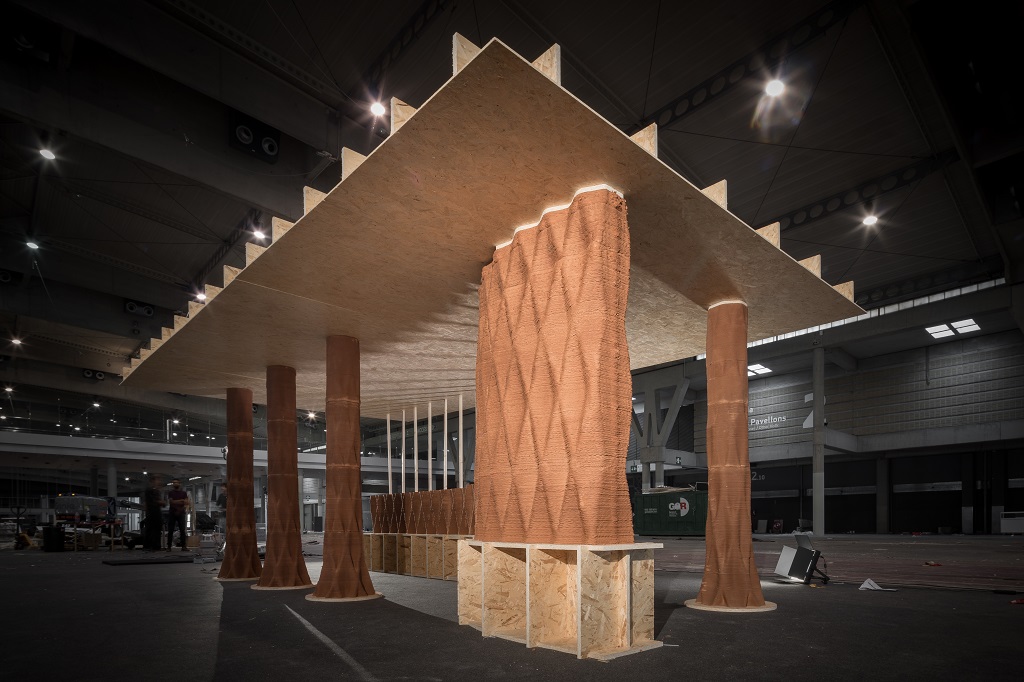
“The flexibility to build in vast construction sites together with the power of 3D printing technology helps to create new architectural designs, which are increasingly more complex, using less material and depositing it where it is strictly needed,” said Alexandre Dubor, IAAC Robotics Expert and project collaborator.
While the structures created by IAAC’s system are beautiful to look at, their goal is more than just artistic architecture. Inadequate housing is a growing crisis across the world; no region is wholly unaffected by shortages of shelter. On Site Robotics’ ability to 3D print strong, stable buildings on the spot with speed and efficacy could be extremely useful in building homes in underserved areas – especially since the technology does not require expensive materials, but can work with whatever is plentiful in the area.
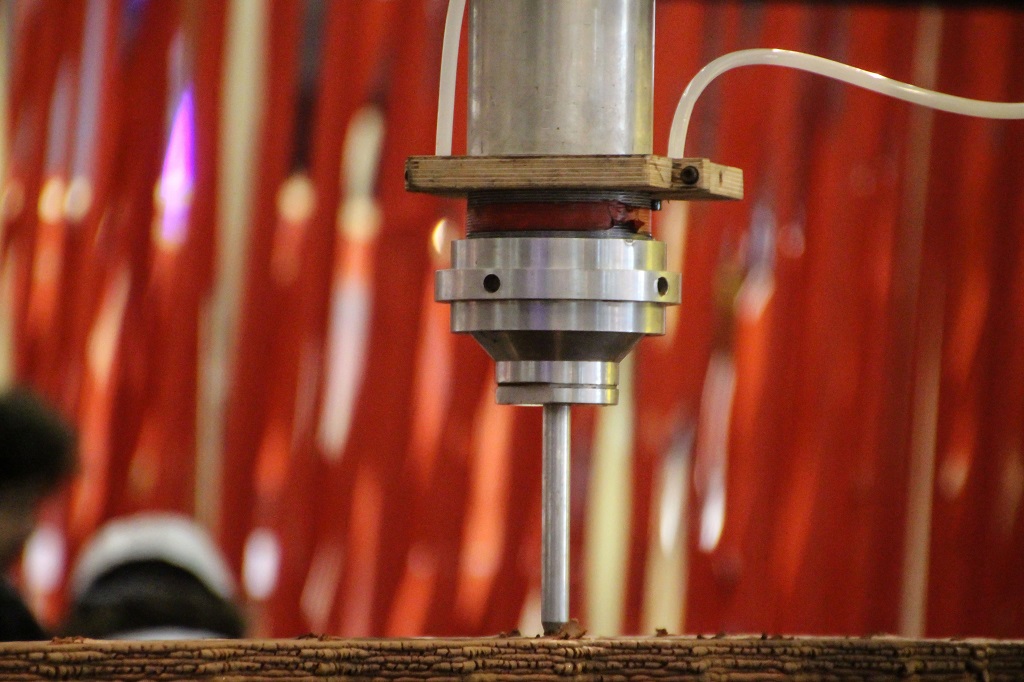
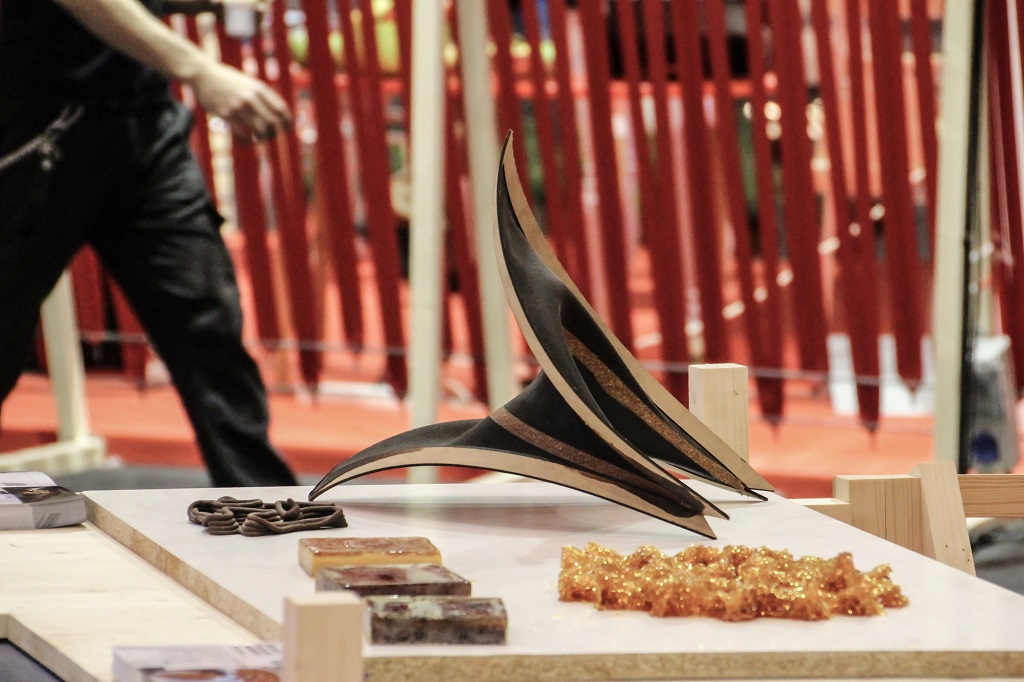
“On Site Robotics technology might be very useful for places with different needs where there are not enough resources such as refugee camps, areas affected by extreme conditions, or urban environments facing environmental issues by only using sustainable and local materials,” said Markopoulu.
IAAC has been working on the development of this technology for more than 10 years. You can learn more about the institute’s work here. Discuss in the IAAC forum at 3DPB.com.
[Images provided by IAAC]
Subscribe to Our Email Newsletter
Stay up-to-date on all the latest news from the 3D printing industry and receive information and offers from third party vendors.
Print Services
Upload your 3D Models and get them printed quickly and efficiently.











You May Also Like
Scaling 3D Printing Takes More Than You Think; HP’s Webinar Looks at Making It Work Long Term
3D printing is no longer new. In fact, most manufacturers already know what it is, where it fits, and what it can do. But knowing the technology and actually scaling...
How AtomForm’s 12-Nozzle System Cuts Multi-Color FDM Transition Waste by Up to 90%
Pull up the print stats on multi-color FDM jobs. The number that stings isn’t time; it’s material efficiency. On six-color models, single-nozzle systems consume significant filament during transition flushing, expelling...
RAPID 2026: Democratizing Metal Laser Powder Bed Fusion 3D Printing with Mastrex
Aside from a quick mention in an episode of our Printing Money podcast, I didn’t know much about Mastrex. But when I heard that the company had developed a $39,000...
3D Printing News Briefs, April 25, 2026: Competition Winners, AI Platform, X2D Printer, & More
In this weekend’s 3D Printing News Briefs, AMUG announced the winners of its Technical Competition, and Authentise launched AI platform Whisper at RAPID. Bambu Lab wasn’t at RAPID, but launched...